Build the operational infrastructure your business needs to scale.
Your business grew. Your systems didn't. We design and implement the systems connecting your clients, projects, team, processes, and existing tools, with automation and AI built around how your company actually works.
Your business grew.
Your systems didn't.
Connect what works.
Build what's missing.
Automate what's manual.
We diagnose how
you operate. Then design
and build the system
that fits.
We start with how your company actually runs today: sales, projects, team, processes, data, and the software you're already using. Then we design the operational architecture that connects it, and implement it.
Systems, integrations, automation, and AI workflows, built around your business, not a template applied to it. Your information migrated in. Your team trained on it. You run the company from it.
We're not a report you have to implement yourself.
Most operations consulting ends in a deck of recommendations. We diagnose, design, and build the system, connected to your existing tools, live, and in use.
-
Technology-neutral, not tool-first We recommend one of three paths (optimize, integrate, or consolidate), whichever fits how you operate. Not one platform forced on your company.
-
Built on what already works We connect and improve the software you're already paying for before recommending anything new.
-
Mapped to how you actually operate Your workflows, your roles, your handoffs. Not a generic playbook applied to your company.
-
Implemented, not just recommended Diagnosis, design, build, integration, automation, and AI, carried through to a system your team is actually running on.
-
Supported through adoption Training, launch support, and optimization after go-live, so it's still holding up once we're not in the room.
We don't replace tools
that work. We connect them.
A sample of what we build around: sales, delivery, automation, and finance, side by side. The diagnosis decides what your company needs; that decides which of these (if any) belong in the system.
Plus whatever your team already runs on: CRM, files, accounting, or a specialist tool for your industry.
The systems that run the company.
Connected. Not scattered.
CRM, leads & pipeline.
Leads, companies, contacts, deals, and proposals in one place. Every opportunity tracked from first contact to signed work, with the reporting that comes with it.
Projects, phases & deliverables.
Signed work turns into a project automatically: phases, tasks, milestones, deadlines, and owners set up the same way, every time.
Team, SOPs & knowledge
Capacity, workload, and the processes currently living in people's heads, written down where the team will actually find them.
Financial handoffs
Invoices, payments, and budget vs. actual, connected to the accounting software you already run on, not replaced by it.
AI workflows
Meeting summaries, action extraction, knowledge agents, and reporting, applied where they save real, repeated effort.
One view of the whole company.
Dashboards for pipeline, project health, capacity, risk, and KPIs, so leadership stops finding out what's happening in a status meeting.
Automations across the handoffs.
Project setup, notifications, data sync, and reporting: the repetitive work running in the background instead of depending on someone remembering.
Your existing software, connected.
We don't replace tools that already work. We connect them, so information moves between systems without anyone copying it by hand.
Real companies. Real systems, already live.
A sample of the operational systems we've diagnosed, built, and connected: one recurring problem, one system, per case study.
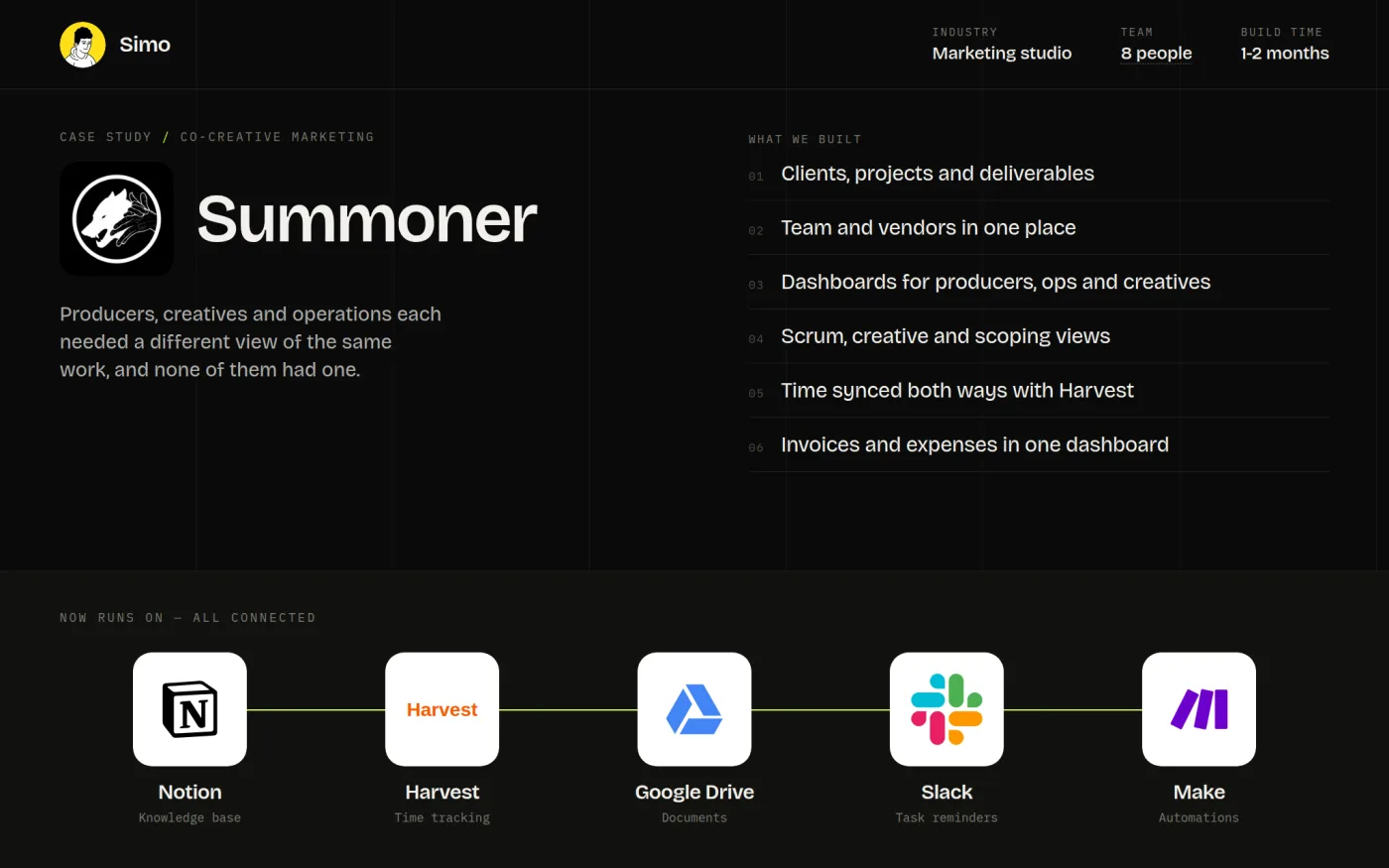
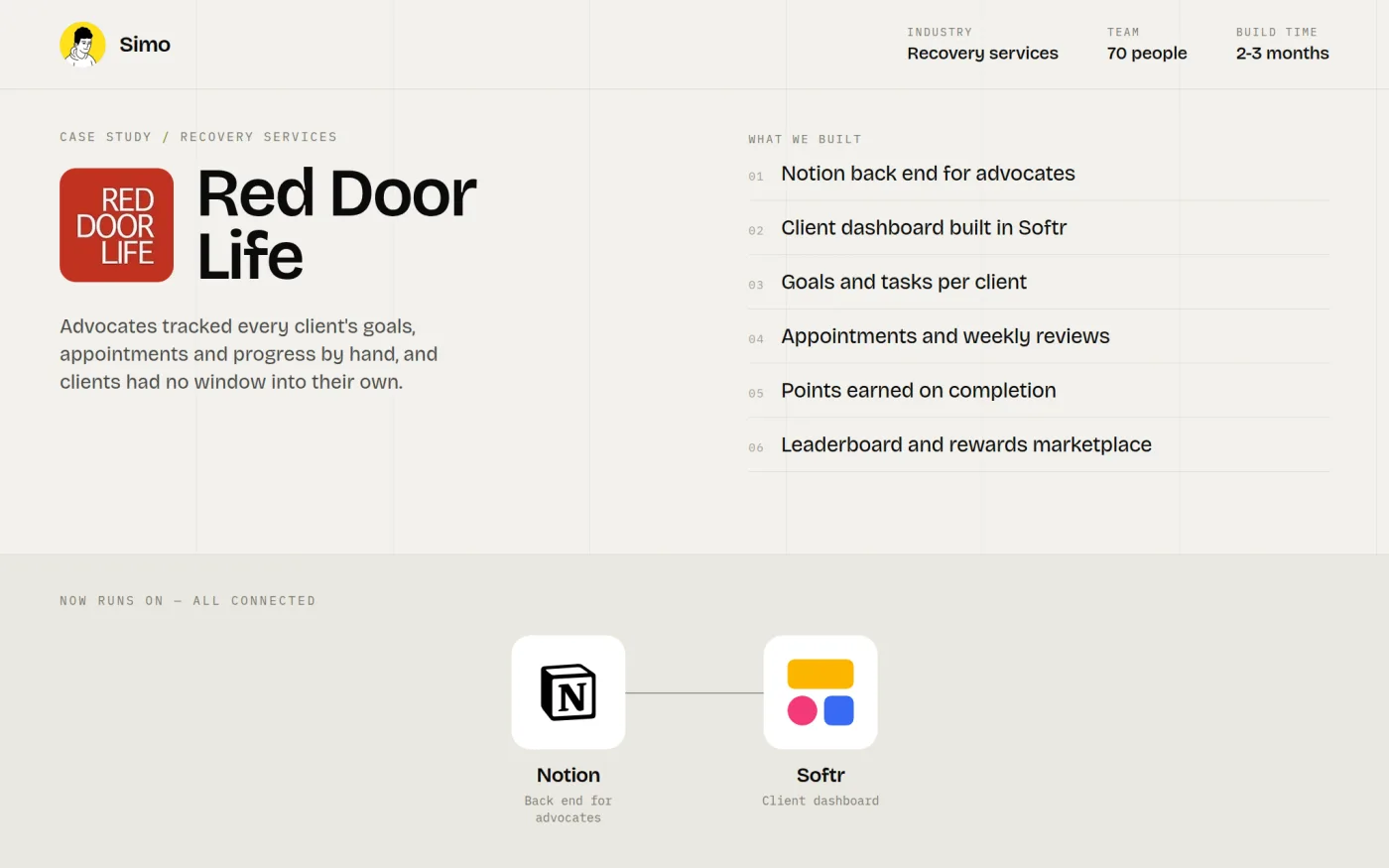
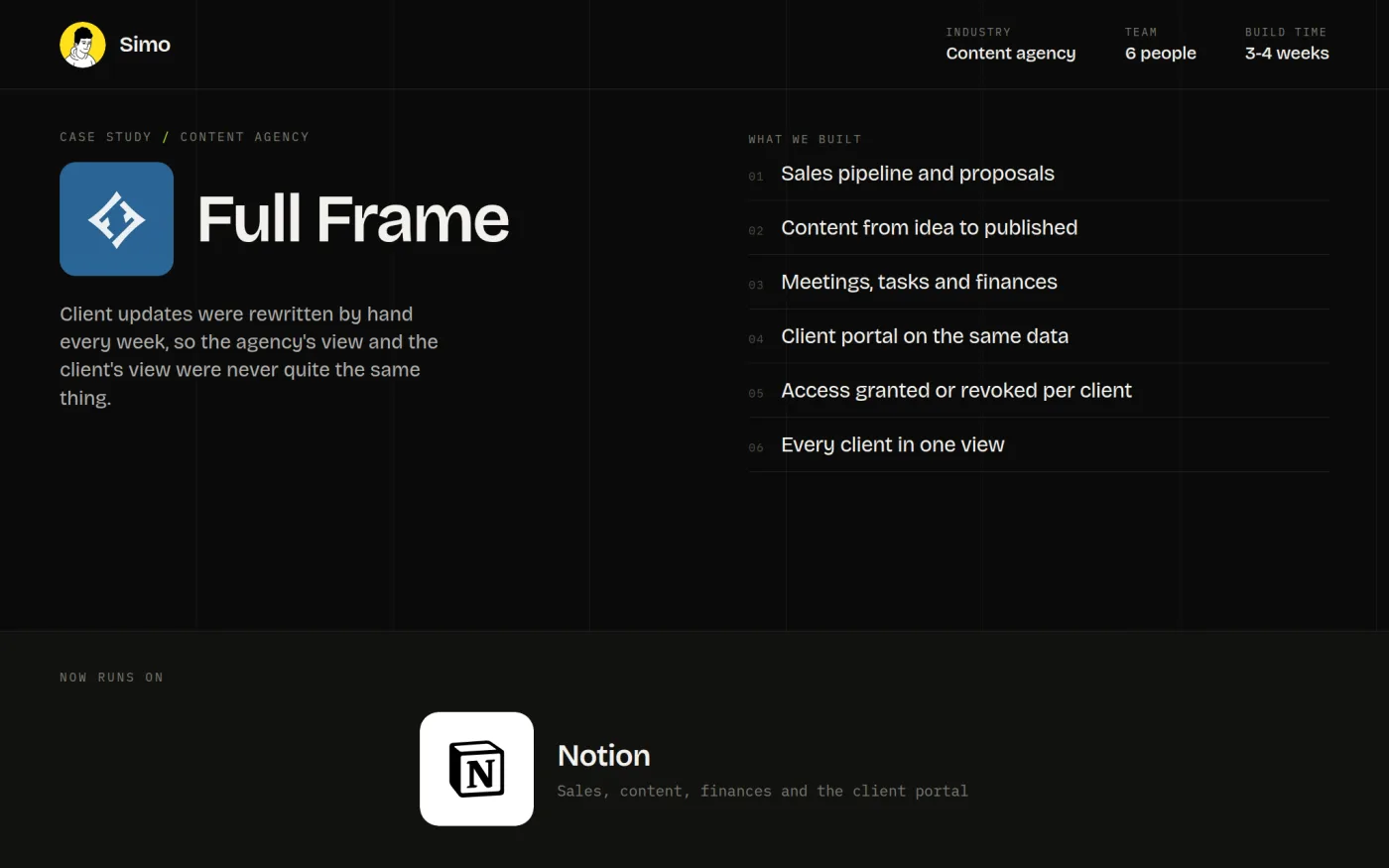
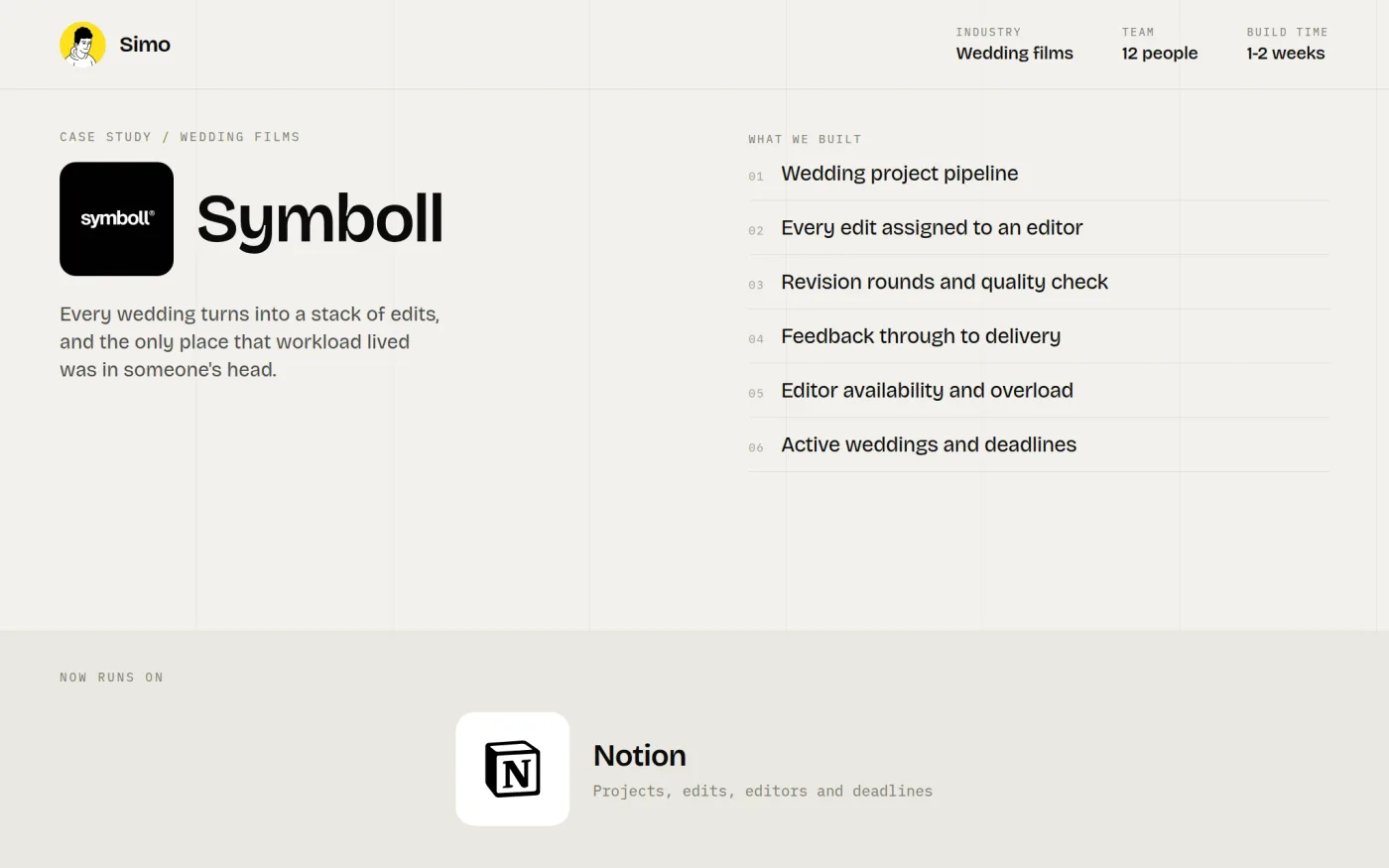
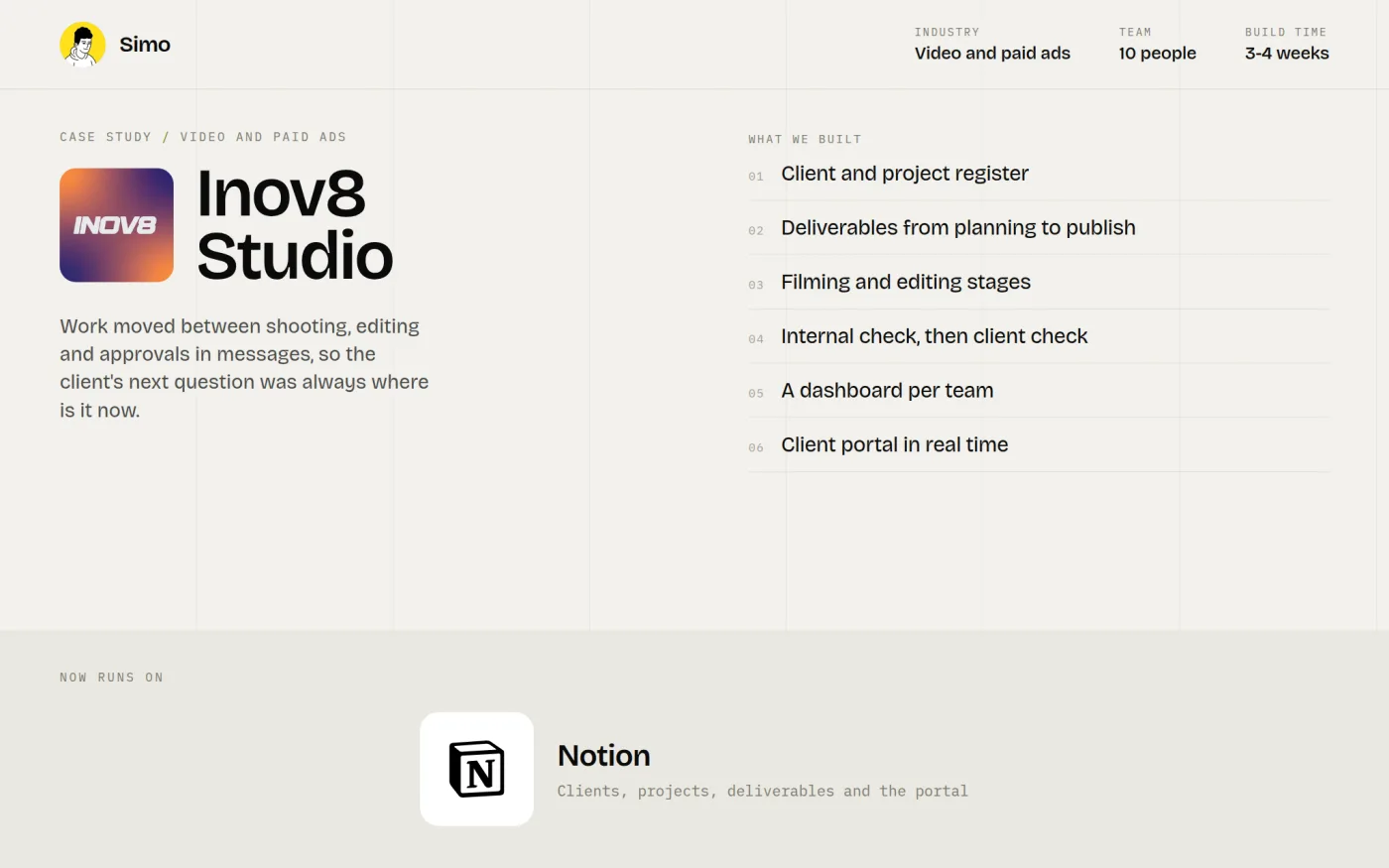
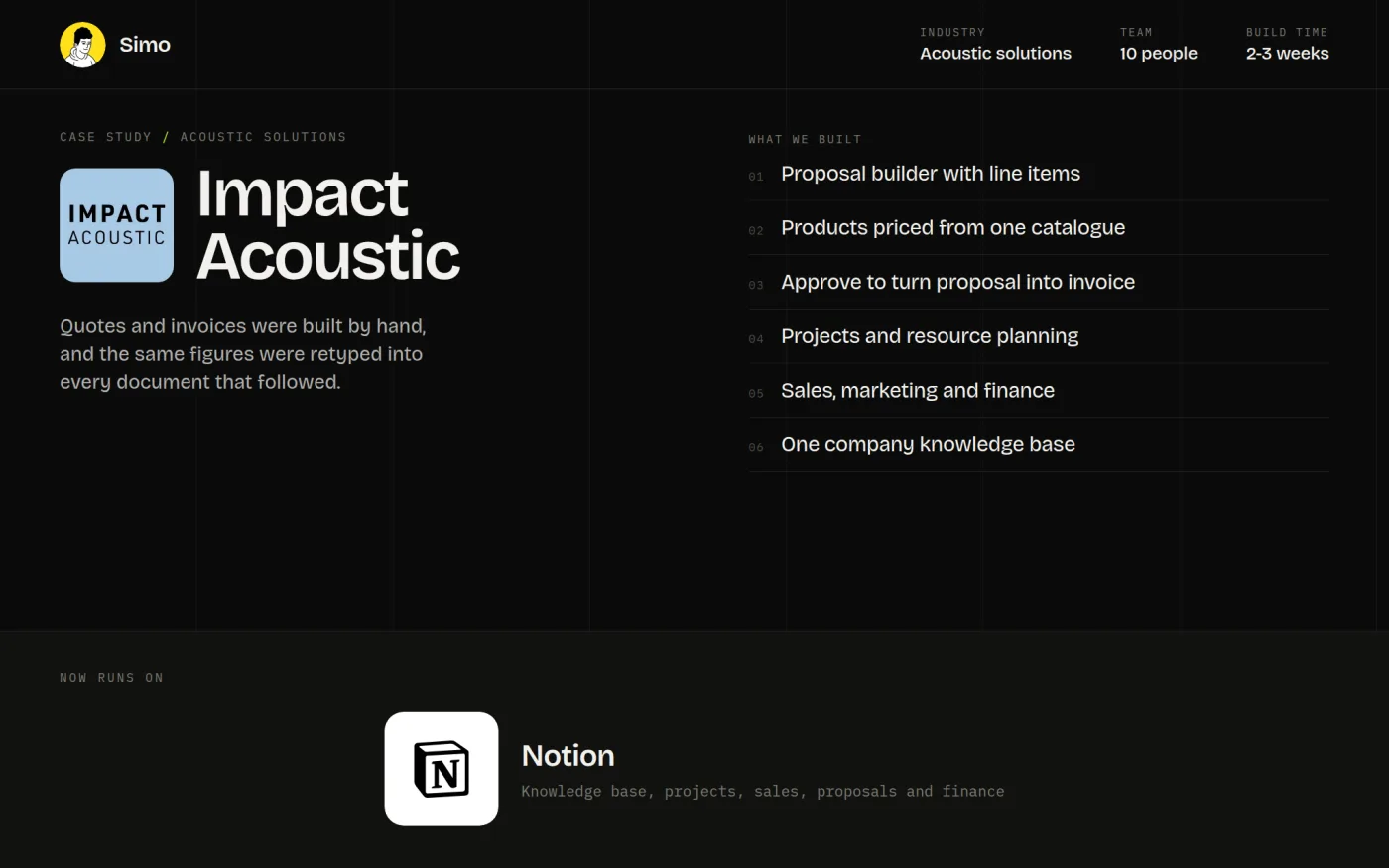
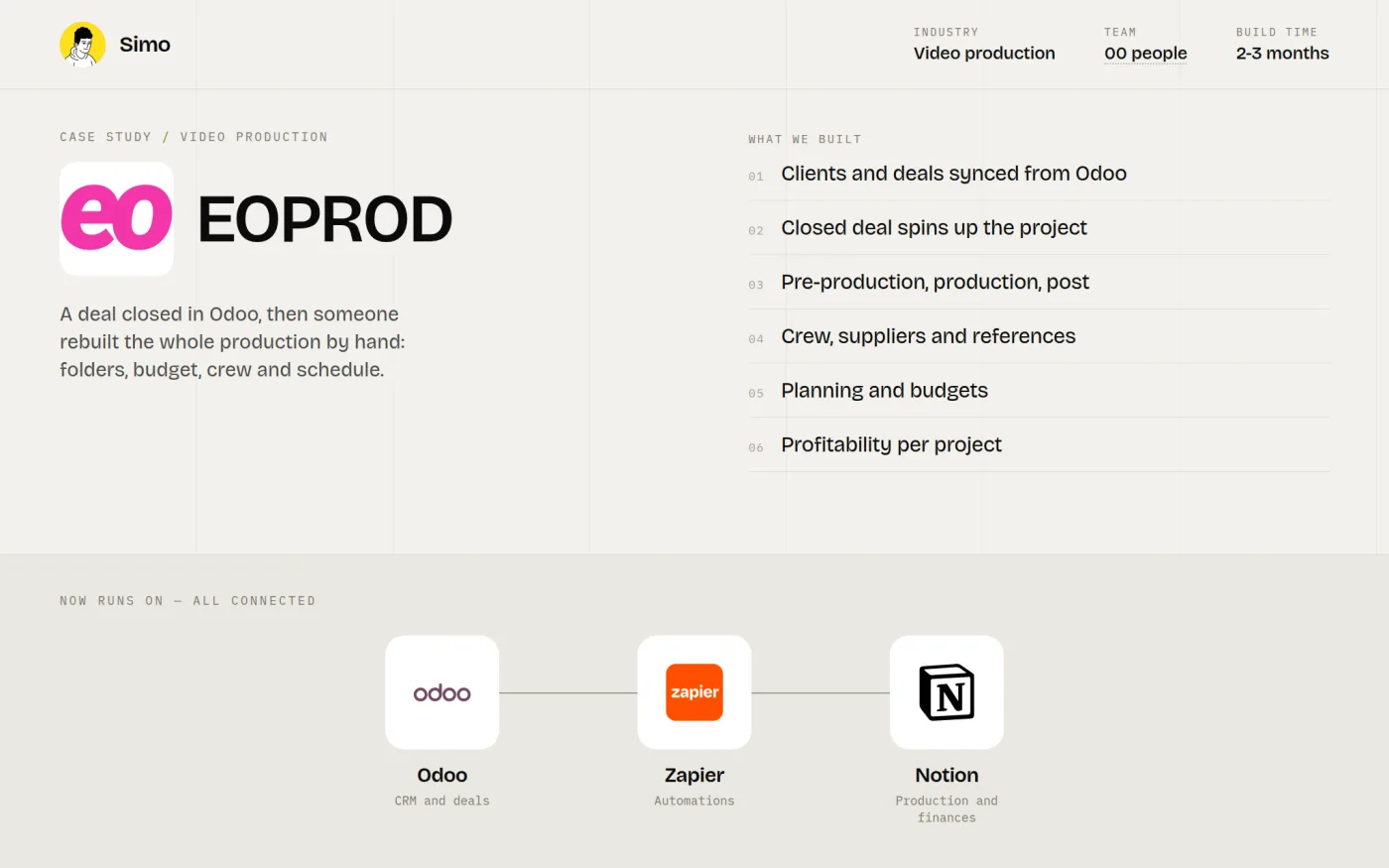
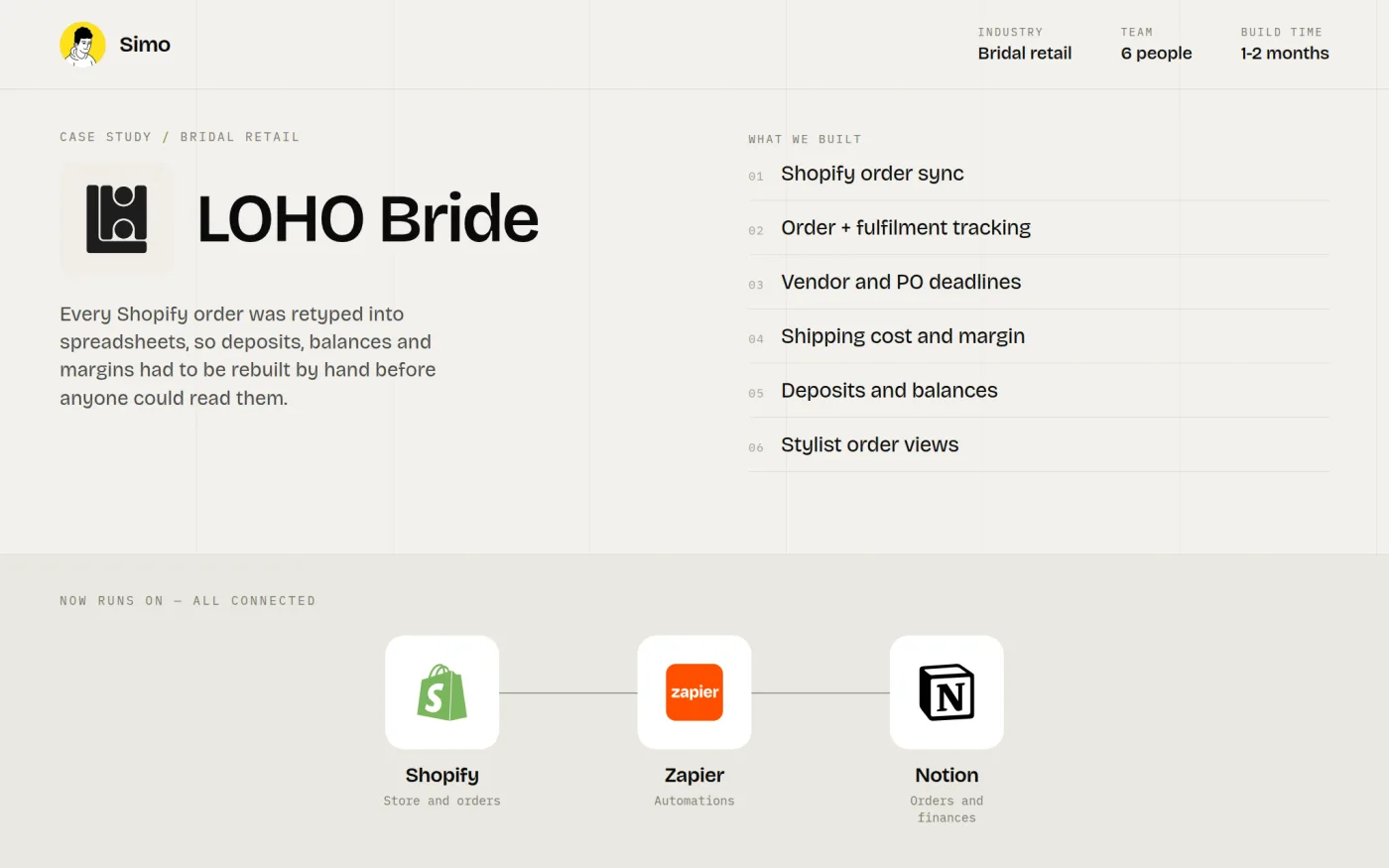
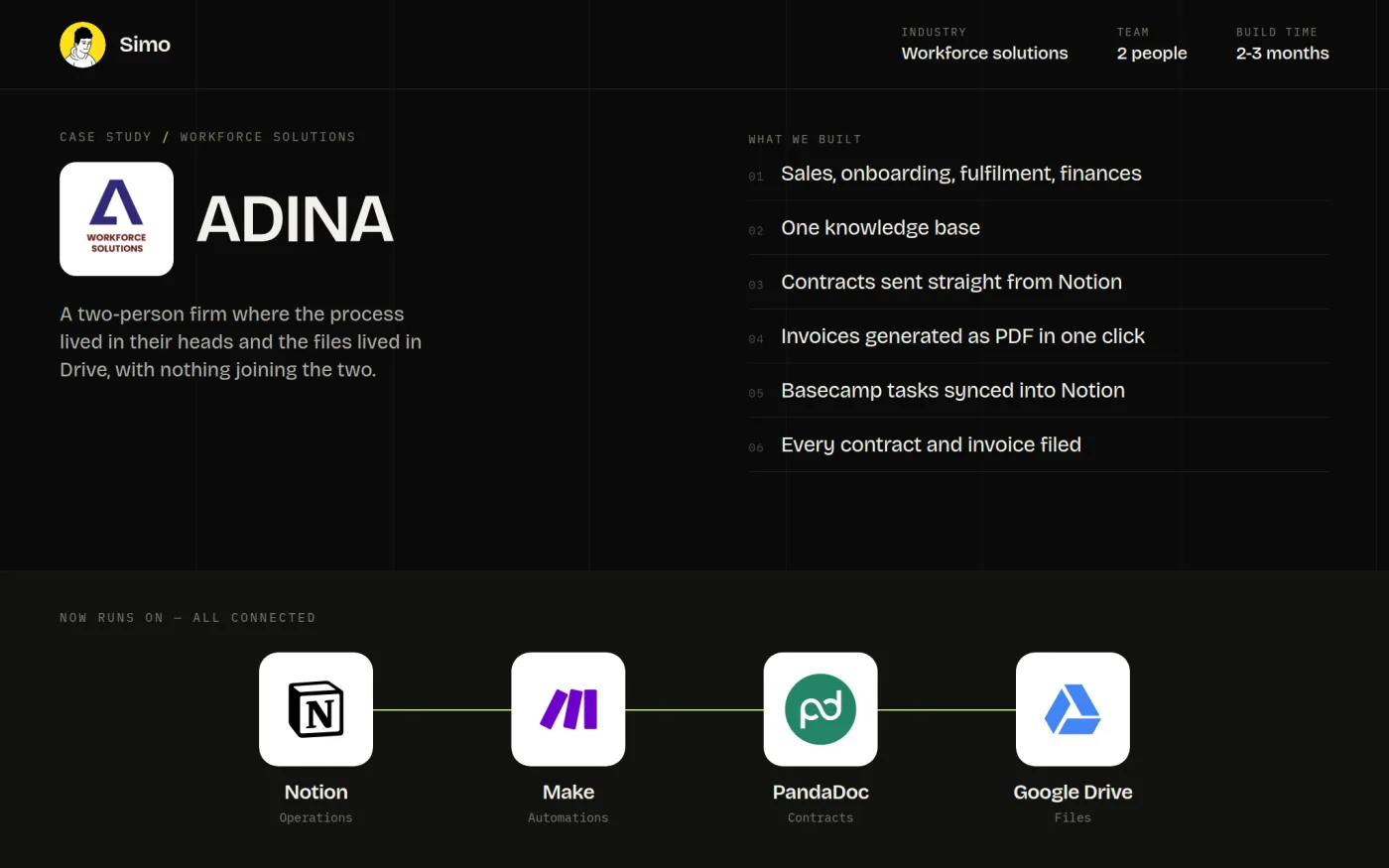
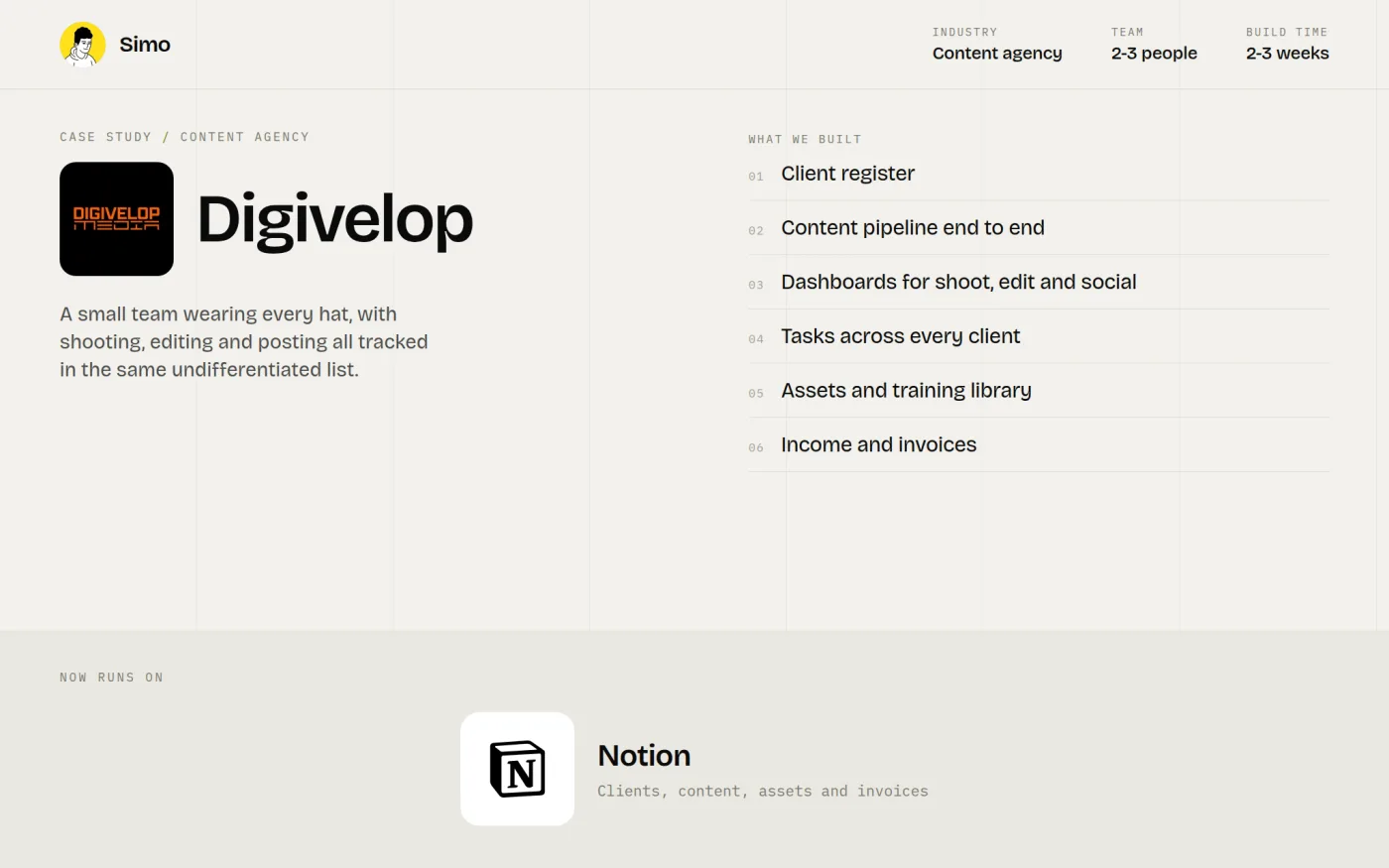
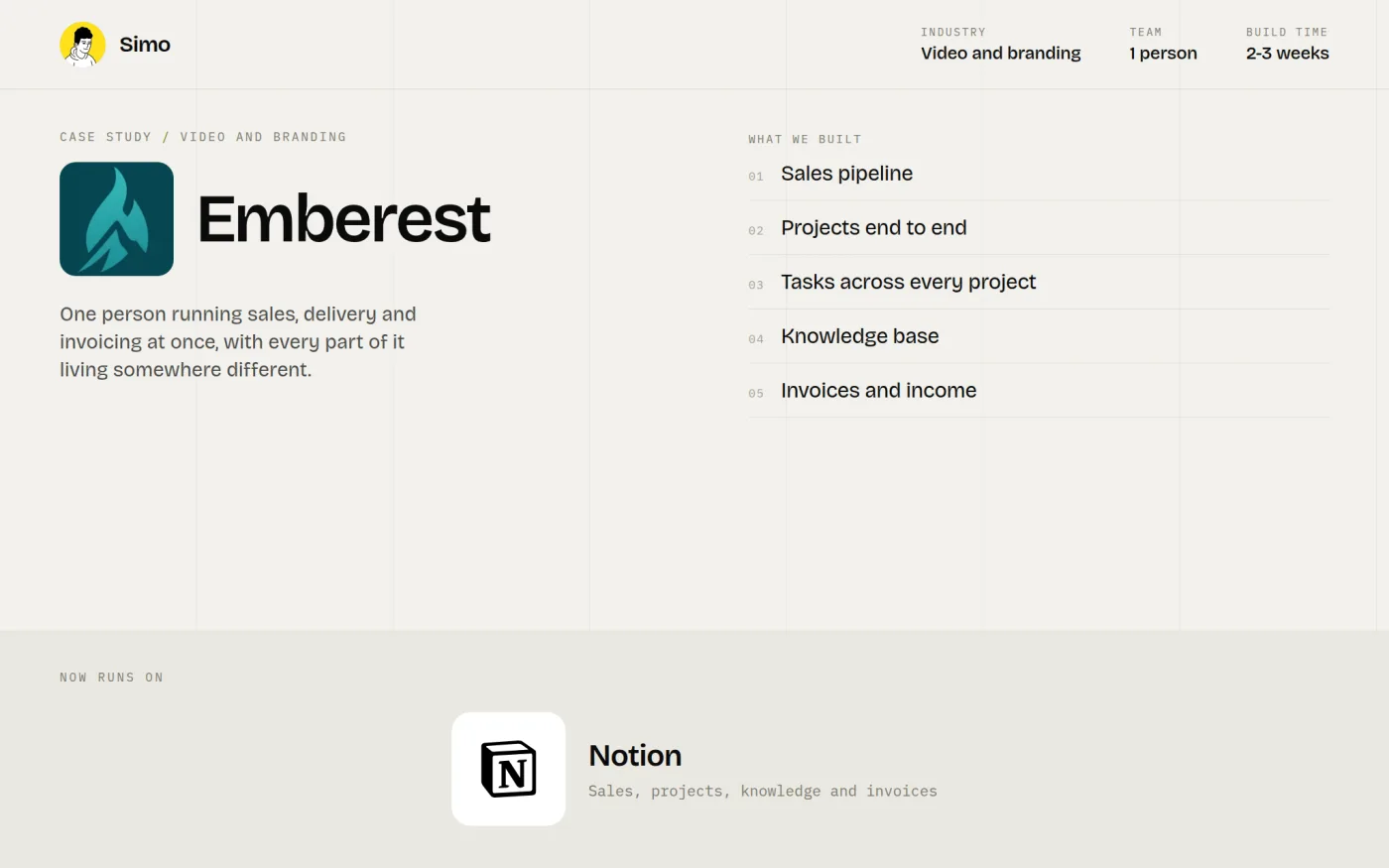
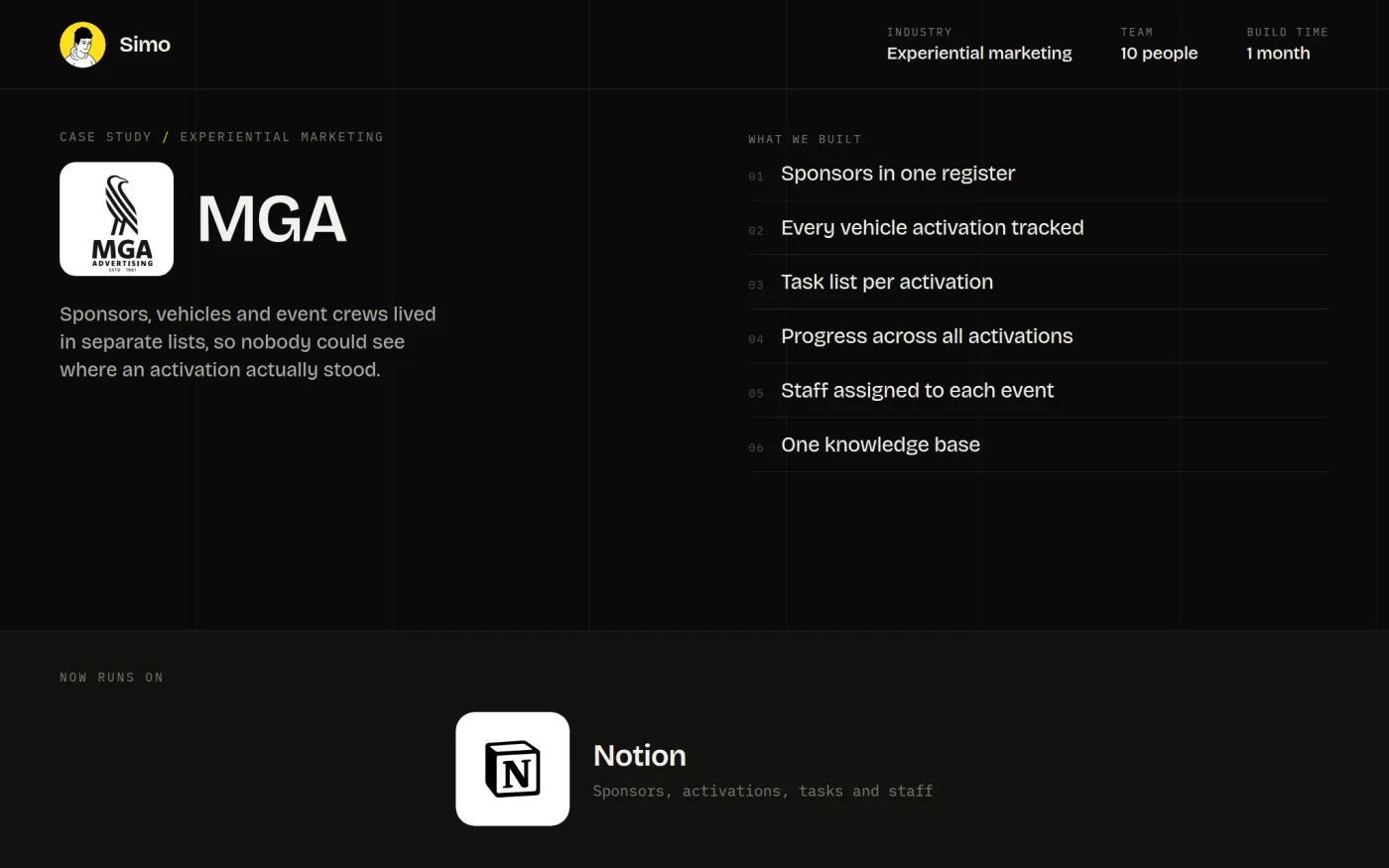
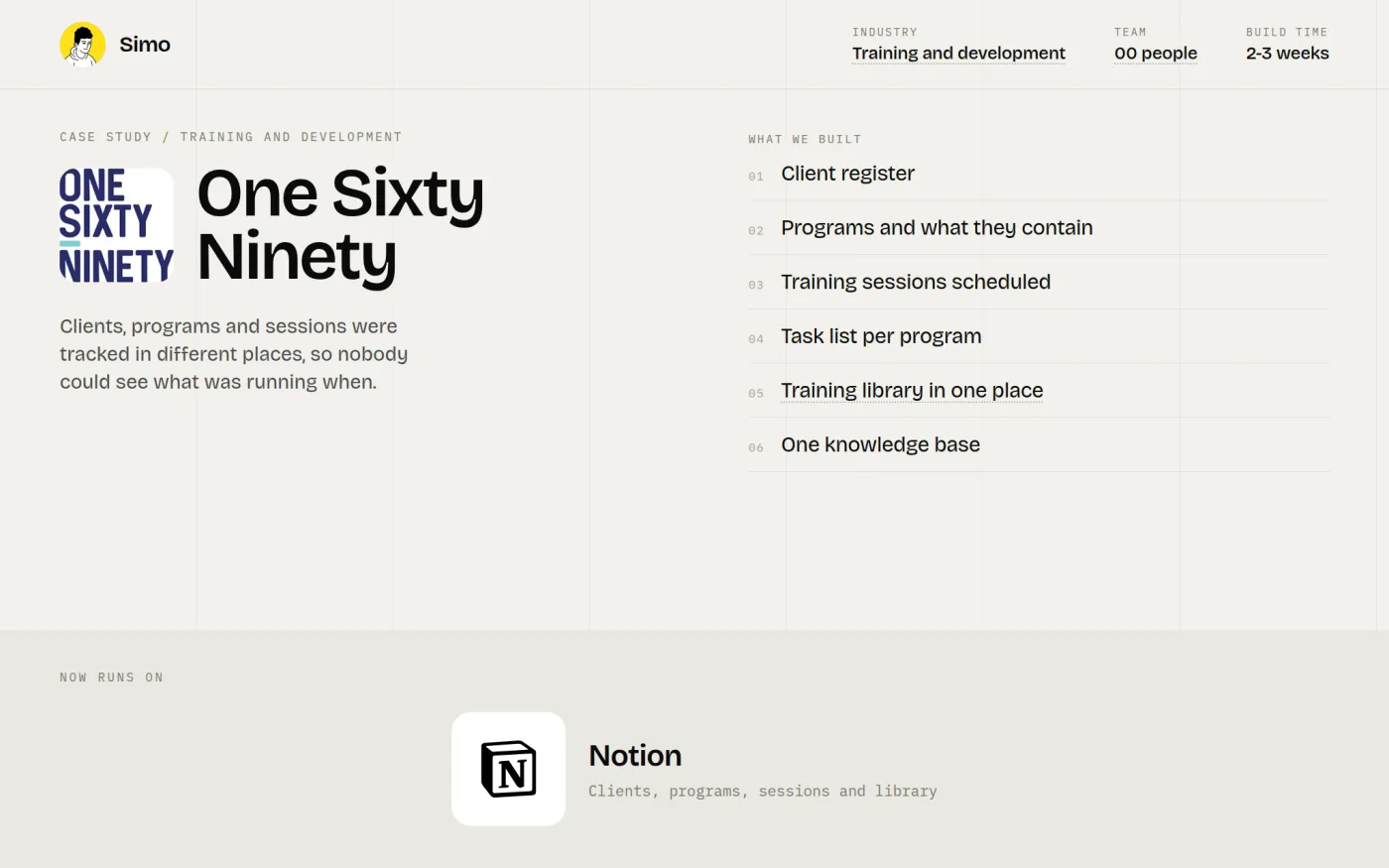
Click any case study to view it full size.
What changes once the system is live.
Before · How the company runs today
- ✕Your CRM, your projects, and your files live in different systems that don't talk to each other.
- ✕People spend real time each week moving information between tools by hand.
- ✕Every deal, project, and exception still routes through you before it moves.
- ✕Two projects run in two completely different ways, depending on who's leading them.
- ✕You find out something's at risk in a status meeting, not before one.
- ✕A new hire needs weeks of shadowing before they understand how anything works.
After · Once the system is live
- →Sales, projects, team, and finance connect through one operational layer.
- →The repetitive handoffs run on automation instead of someone's inbox.
- →The team runs delivery on its own. You step in for exceptions, not routine.
- →Every project follows the same phases, owners, and checkpoints.
- →One dashboard shows pipeline, project health, workload, and risk.
- →A new hire is productive faster, because how you work is documented and connected.
From first call to live system.
Diagnose
A free discovery call, then a paid Operational Systems Diagnosis, understanding how your company actually operates today.
Design
We map your current systems and workflows, identify the gaps, and design the future-state blueprint your company needs.
Implement
A custom implementation proposal, then the build: systems, integrations, automation, and AI, connected across your existing tools.
Launch
We migrate what matters, test the system, and train the team so it's actually in use from day one.
Optimize
Optional ongoing support, refining the system as your team, your process, and your company keep evolving.
The real questions,
answered directly.
Let's talk about
the systems
your business needs.
Book a discovery call. We'll go through how your company operates today, your current stack, and whether a deeper diagnosis makes sense. If it isn't the right move, we'll tell you that.
Book a discovery call ↗ Simo
Simo